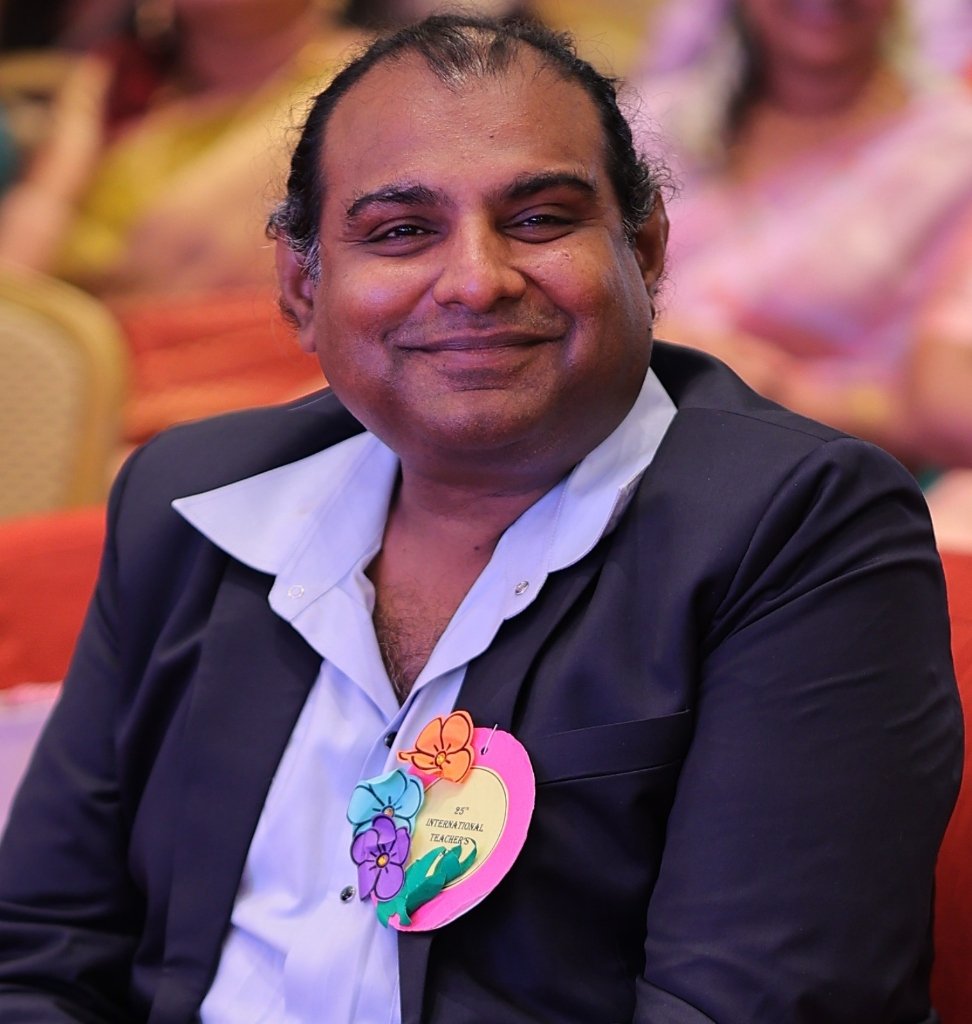
How Multiple Intelligences Theory Shapes Child Development | Dr. J. Arawindhan on Gobinath Podcast
Explore how Howard Gardner's Multiple Intelligences Theory shapes child development, learning beyond exams, and individual strengths, inspired by Dr. J. Arawindhan's discussion on the Gobinath Podcast.
1. Beyond Academic Performance: Recognizing Diverse Abilities in Children
Every child is unique. Some children express themselves through art and music, while others excel in problem-solving, communication, physical activities, or understanding people. These differences raise an important question: Is intelligence only about academic performance, or do children possess different kinds of abilities?
The Theory of Multiple Intelligences, introduced by psychologist Dr. Howard Gardner in 1983, offers a broader perspective on intelligence. This concept provides a useful framework for understanding children's individual strengths and exploring different approaches to education.
In a discussion featured on the Gobinath Podcast, Dr. J. Arawindhan highlights ideas related to child development and education. Exploring multiple intelligences in this context encourages parents and educators to look beyond marks and examinations and recognize the different ways children can learn, think, and express themselves.
2. What Is Multiple Intelligences Theory?
Dr. Howard Gardner proposed that human intelligence cannot be understood through a single measure, such as IQ, alone. His theory identifies different forms of intellectual ability, suggesting that people may demonstrate strengths in different areas.
The theory is particularly relevant to discussions about education because children do not all learn or express their understanding in the same way. A child who finds mathematics challenging might demonstrate excellent musical ability, creative thinking, communication skills, or practical problem-solving.
However, multiple intelligences should not be used to label children permanently. Instead, the concept can encourage adults to provide varied learning experiences and opportunities for children to develop a broad range of skills.
3. The Eight Types of Intelligence in Children
Dr. Howard Gardner's theory describes eight commonly discussed intelligences:
• Linguistic Intelligence: The ability to use language effectively through speaking, reading, writing, and storytelling.
• Logical-Mathematical Intelligence: The ability to reason, identify patterns, work with numbers, and solve problems.
• Visual-Spatial Intelligence: The ability to understand images, shapes, designs, and spatial relationships.
• Musical Intelligence: Sensitivity to rhythm, melody, sound, and musical patterns.
• Bodily-Kinesthetic Intelligence: The ability to use body movements and physical coordination in activities such as sports, dance, and hands-on learning.
• Interpersonal Intelligence: The ability to understand other people, communicate effectively, cooperate, and build relationships.
• Intrapersonal Intelligence: The ability to recognize one's own emotions, motivations, strengths, and limitations.
• Naturalistic Intelligence: The ability to recognize patterns in nature and understand plants, animals, and the environment.
These categories offer different ways to think about children's abilities. A child may demonstrate strengths in several areas rather than fitting into just one category.
4. How Multiple Intelligences Theory Shapes Child Development
Applying this theory transforms modern child rearing and education in five fundamental ways:
1. Encourages Individual Learning Opportunities
Children have different interests, experiences, and strengths. Using a variety of teaching methods—including storytelling, visual materials, experiments, music, and practical activities—can give children more opportunities to understand and engage with lessons.
2. Develops Creativity and Curiosity
Children benefit from opportunities to ask questions, experiment, explore, and create. Drawing, building, performing, observing nature, and solving puzzles can encourage curiosity and creative expression.
3. Builds Confidence and Self-Expression
When children are encouraged to explore different activities, they may discover abilities that are not always visible through traditional classroom assessments. Recognizing their progress can help them develop confidence and a positive attitude toward learning.
4. Strengthens Social and Emotional Skills
Group activities, collaborative projects, storytelling, and reflective exercises can help children practice communication, cooperation, empathy, and self-awareness. These skills are important parts of overall development.
5. Encourages a Broader Approach to Education
The theory invites parents and teachers to consider learning beyond textbooks and examinations. A balanced educational experience can include academics, physical activity, creativity, social interaction, and opportunities to explore the natural world.
5. The Role of Parents and Teachers
Parents and teachers play an important role in creating environments where children can explore their interests without unnecessary pressure or comparison.
Simple activities can introduce children to different experiences. Reading stories can develop language skills, building blocks can encourage spatial reasoning, music can introduce rhythm, and outdoor exploration can support observation and curiosity.
Teachers can also present the same topic in different ways. For example, a lesson about the solar system might include diagrams, storytelling, model-making, group discussions, and practical demonstrations.
The goal is not to identify one fixed intelligence for each child. It is to provide varied experiences, observe what engages them, and support their development across different areas.
6. Dr. J. Arawindhan's Insights on the Gobinath Podcast
The discussion featuring Dr. J. Arawindhan on the Gobinath Podcast provides an opportunity to explore important questions about children, intelligence, and the future of education.
Connecting this discussion with Dr. Howard Gardner's Theory of Multiple Intelligences can help readers reflect on how children's abilities may extend beyond conventional academic measures.
For parents, educators, and school leaders, the broader takeaway is to recognize individual differences and create learning environments that encourage exploration, creativity, critical thinking, and personal growth.
Specific statements and interpretations from Dr. J. Arawindhan should be included in this section only when supported by the original podcast recording or transcript.
7. Fostering Every Child's Unique Potential
Multiple Intelligences Theory offers a valuable perspective on the different ways children may demonstrate their abilities. It encourages parents and educators to look beyond examination results and provide opportunities for children to explore their interests, develop skills, and become confident learners.
By combining academic learning with creativity, physical activity, social interaction, and practical experiences, schools can offer a more varied and engaging educational environment.
As discussions about child development and education continue, the ideas associated with Dr. Howard Gardner's theory can serve as a starting point for rethinking how children's individual strengths are recognized and supported.
The important message is simple: every child deserves opportunities to explore, learn, and develop their potential in more than one way.
Frequently Asked Questions (FAQs)
Who developed the Theory of Multiple Intelligences?+
Psychologist Dr. Howard Gardner introduced the Theory of Multiple Intelligences in 1983.
What is the Theory of Multiple Intelligences explained by Dr. J. Arawindhan?+
The Theory of Multiple Intelligences, developed by Dr. Howard Gardner, suggests that intelligence involves different kinds of abilities rather than being measured only through academic performance. In the context of child development, this theory encourages parents and educators to recognize children's diverse strengths and provide opportunities to develop them.
How many types of intelligence are included in Gardner's theory?+
The theory commonly describes eight intelligences: linguistic, logical-mathematical, visual-spatial, musical, bodily-kinesthetic, interpersonal, intrapersonal, and naturalistic.
How can multiple intelligences support child development?+
The theory can encourage varied learning activities that give children opportunities to explore different interests, practice skills, and express their understanding in different ways.
Why is multiple intelligences relevant to modern education?+
It encourages educators to consider a variety of teaching approaches and recognize that academic scores alone do not capture every aspect of a child's abilities.